If you have ever rebooted a frozen server from halfway across the world, monitored the fan speeds of a machine that was powered off, or updated BIOS settings without physically touching a keyboard, you have a BMC (Baseboard Management Controller) to thank.
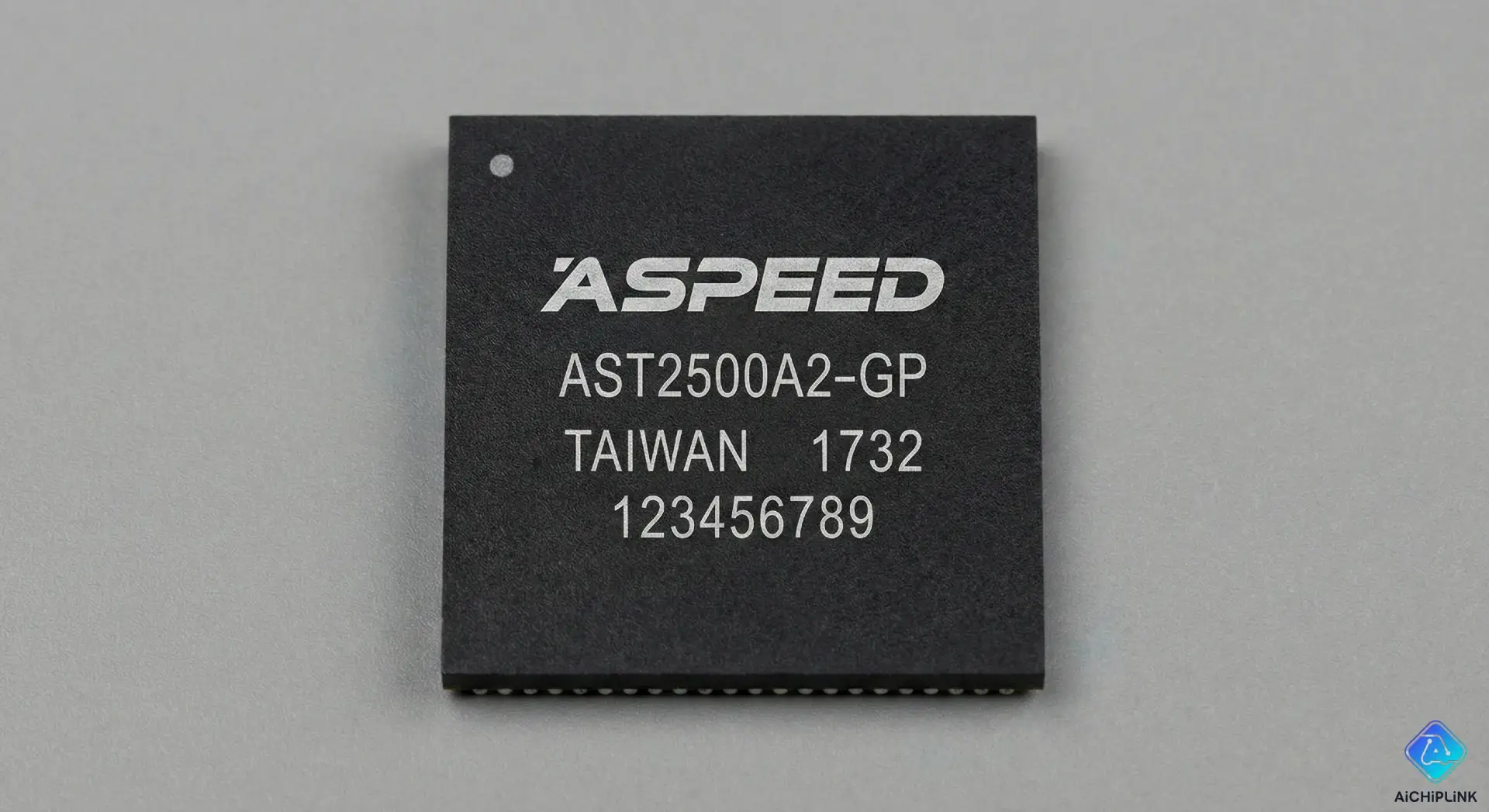
And mostly likely, that BMC was the ASPEED AST2500A2-GP.
For the better part of a decade, the AST2500 has been the "Ghost in the Machine" for the global server market. Dominating designs from Dell, Supermicro, Gigabyte, and Tyan, it acts as the dedicated service processor that keeps data centers running. While the newer AST2600 is gaining ground in AI servers, the AST2500 remains the backbone of existing enterprise infrastructure.
This guide provides an exhaustive technical analysis of the AST2500A2-GP, covering its architecture, the shift to OpenBMC firmware, and critical hardware design considerations.
Table of Contents
- 1. Decoding the Silicon: AST2500A2-GP Specs
- 2. The Brain of the Server: iKVM & Interfaces
- 3. Firmware Ecosystem: The OpenBMC Revolution
- 4. Hardware Design: Memory & Migration
- 5. Conclusion
1. Decoding the Silicon: AST2500A2-GP Specs
The AST2500 is the 6th generation Server Management Processor from ASPEED Technology. Unlike a standard CPU, it is highly specialized, integrating a service processor, a 2D graphics adapter, and a vast array of sensor interfaces (ADC, PWM, Tachometer) into a single chip.
Key Specifications Matrix
| Feature | Specification | Notes |
|---|---|---|
| Processor Core | ARM1176JZ-S | 800 MHz, Single Core |
| Memory Interface | DDR3 / DDR4 SDRAM | 16-bit width, up to 1GB capacity |
| Host Interface | PCIe Gen 2 x1 | Connects to PCH (Platform Controller Hub) |
| Graphics | 2D Video Graphic Adapter | Max resolution 1920x1200 @ 60Hz |
| Network | 2x MACs | Supports RGMII, RMII, and NC-SI |
| Storage | SMC (Static Memory Controller) | Supports SPI Flash for Firmware |
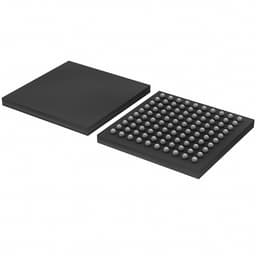
| Package | TFBGA-400 | 17mm x 17mm, 0.8mm pitch |
What does "A2-GP" Mean?
When sourcing this component, the suffix is critical:
- AST2500: The base model number.
- A2: Represents the Silicon Revision.
- Why it matters: The original "A1" stepping had minor errata related to the DDR memory controller compatibility. The A2 revision fixed these stability issues and is the standard for mass production.
- GP: Stands for Green Package. This indicates the chip is Halogen-free and RoHS compliant, meeting international environmental standards.
Price Analysis & Stock Availability
As the industry standard for repair and new budget-conscious designs, the AST2500A2-GP is in high demand.
Procurement Tip: Availability can fluctuate due to mature process node capacity. [Check Stock for AST2500A2-GP at Aichiplink] to view real-time inventory from authorized global distributors.
2. The Brain of the Server: iKVM & Interfaces
The AST2500 operates on standby power (V_Standby), meaning it is "alive" even when the server is powered down, provided the PSU is plugged in.
How iKVM Works (Video Redirection)
The "Killer Feature" of the AST2500 is iKVM (Keyboard, Video, Mouse over IP).
- Video Capture: The chip's integrated 2D graphics engine acts as the server's graphics card. It outputs VGA signals to the local port but simultaneously captures the frame buffer in digital format.
- Compression: A dedicated hardware engine compresses these frames (using proprietary ASPEED algorithms or JPEG) to minimize bandwidth.
- Transmission: The compressed video is sent over the network to the IT administrator's browser, allowing them to see the BIOS POST screen or OS crash dumps remotely.
PCIe and NC-SI Connectivity
- PCIe Gen 2 x1: The AST2500 sits on the PCIe bus to monitor the host system's health. It can trigger system resets or read status registers from the main CPU.
- NC-SI (Network Controller Sideband Interface): This interface allows the BMC to "piggyback" on the server's main Network Interface Card (NIC).
- Benefit: This eliminates the need for a dedicated IPMI RJ45 port on the back of the server, saving cost and panel space.
3. Firmware Ecosystem: The OpenBMC Revolution
The hardware capabilities of the AST2500 are defined by the firmware it runs. This ecosystem has shifted dramatically in recent years.
Legacy: AMI MegaRAC
For years, the standard was closed-source firmware, most notably AMI MegaRAC SP-X. This provided a turnkey, stable solution with the familiar "Blue GUI" found on Supermicro and Tyan boards. It relies heavily on the IPMI 2.0 protocol.
Modern: OpenBMC Support
The AST2500 is one of the primary reference platforms for OpenBMC, a Linux Foundation project backed by Intel, IBM, Google, and Meta.
- Why the shift? Hyperscalers needed more security and flexibility than proprietary blobs could provide.
- Features: OpenBMC on AST2500 supports modern Redfish APIs (replacing the insecure IPMI), Web UIs based on Vue.js/Angular, and granular security auditing.
4. Hardware Design: Memory & Migration
DDR4 vs. DDR3 Support
The AST2500 was a significant upgrade over the older AST2400 because it introduced support for DDR4 memory (up to 1600 Mbps).
- Design Note: The memory bus is only 16-bits wide. While it supports DDR4, performance is bandwidth-limited compared to a desktop PC. However, for BMC tasks (logging, web serving), this is more than sufficient.
- Layout: Designers must pay close attention to DDR routing guidelines, even at 1600 Mbps, to prevent signal integrity issues that could cause the BMC to hang.
Comparison: AST2500 vs. AST2600
Is it time to switch to the newer AST2600?
| Feature | AST2500 (Current Standard) | AST2600 (Next Gen) |
|---|---|---|
| Core Architecture | ARM11 (Single Core) | ARM Cortex-A7 (Dual Core) |
| Process Node | 40nm / 28nm | 28nm |
| Security | Basic Hardware features | Hardware Root of Trust (RoT) |
| Boot Time | Moderate | Fast |
| Best For | General Purpose / Repair | AI Servers / High Security |
Verdict: Use the AST2600 if your design requires Hardware Root of Trust (RoT) for Secure Boot compliance (NIST 800-193). For all other standard server applications, the AST2500 remains the most cost-effective and widely supported option.
5. Conclusion
The ASPEED AST2500A2-GP is the unsung hero of the cloud era. It enables the "lights-out" management that makes modern data centers possible. Its robust ARM11 core, flexible memory interface, and seamless support for OpenBMC make it the preferred choice for engineers building reliable server hardware.
Sourcing Server Management ICs Whether you are maintaining legacy fleets or designing new edge appliances, securing genuine ASPEED silicon is critical. Visit Aichiplink.com to search for AST2500A2-GP and other server management solutions.

Written by Jack Elliott from AIChipLink.
AIChipLink, one of the fastest-growing global independent electronic components distributors in the world, offers millions of products from thousands of manufacturers, and many of our in-stock parts is available to ship same day.
We mainly source and distribute integrated circuit (IC) products of brands such as Broadcom, Microchip, Texas Instruments, Infineon, NXP, Analog Devices, Qualcomm, Intel, etc., which are widely used in communication & network, telecom, industrial control, new energy and automotive electronics.
Empowered by AI, Linked to the Future. Get started on AIChipLink.com and submit your RFQ online today!
Frequently Asked Questions
Does the AST2500 require an external GPU
No. The AST2500 *is* the GPU for the server console. It contains a 2D Graphics Adapter that outputs to the VGA port. Note that it is not a 3D accelerator and cannot be used for CUDA/Rendering tasks.
What happens if the AST2500 fails?
If the BMC fails, the server generally continues to run (the main OS is independent). However, fans may spin at 100% (failsafe mode), and you will lose all remote management and telemetry capabilities.
How do I update the firmware?
Firmware is stored on an external SPI Flash chip. Updates are typically done via the BMC's Web GUI (using YAFU or Redfish) or from the host OS using a tool like `socflash` via the LPC/PCIe bridge.
Can AST2500 control fan speeds?
Yes, it has integrated **PWM (Pulse Width Modulation)** outputs and **Tachometer** inputs. The firmware runs a PID loop (thermal algorithm) to adjust fan speeds based on CPU/System temperatures read from sensors.
Is the AST2500 pin-compatible with AST2400?
No. The AST2500 uses a TFBGA-400 package, while older generations differ. They also require different DDR layout rules. It is not a drop-in replacement.