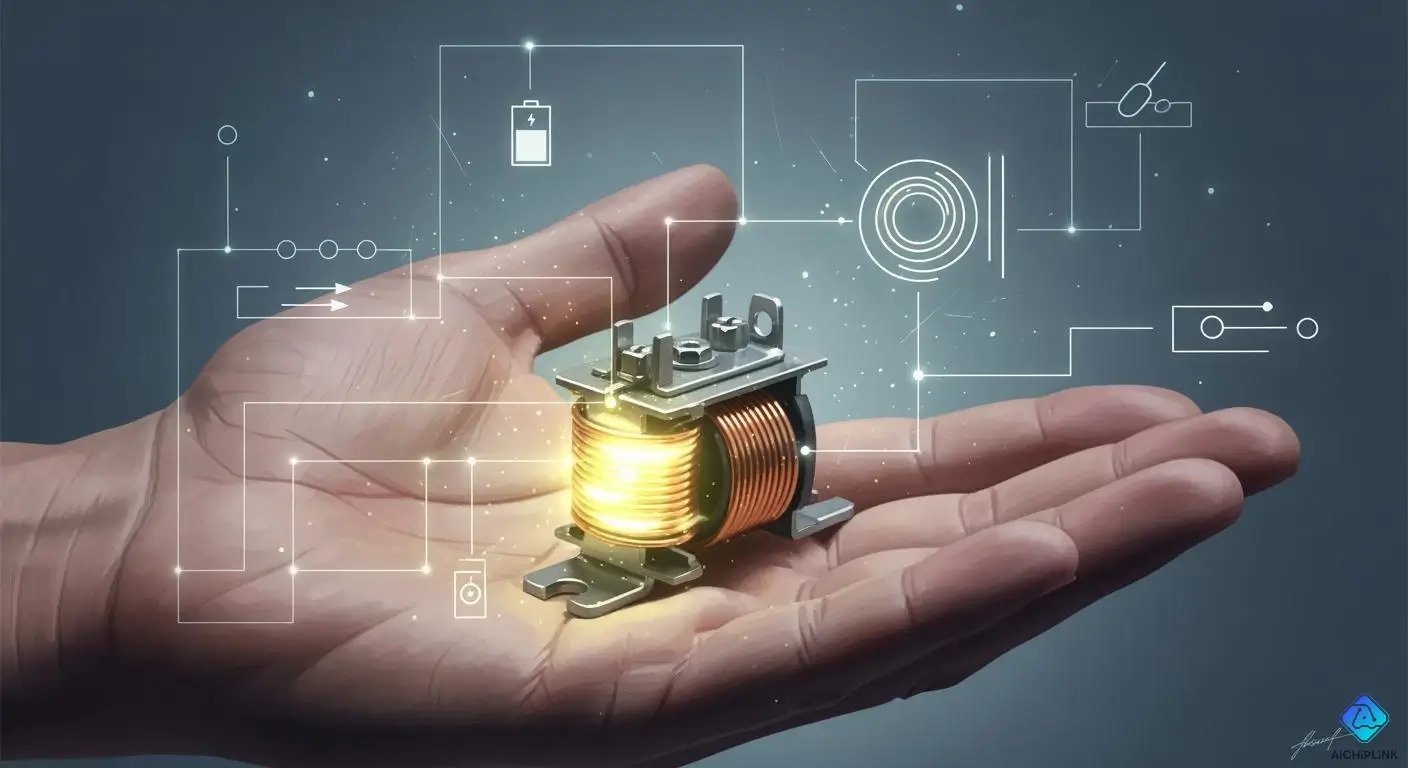
You use an electromagnetic switch to turn electricity on or off in a circuit. In electrical engineering, a switch joins or breaks the path that electricity travels. This stops or changes where the electric current goes. This device lets you control strong circuits with just a little energy. You see it in many machines and things you use every day. It helps make using electricity safe and simple.
Key Takeaways
-
Electromagnetic switches help control electricity in circuits. They let you turn devices on or off with little energy.
-
You can find these switches in cars and washing machines. They are also in security systems. They make tasks easier and keep things safe.
-
If you know the parts of an electromagnetic switch, you can see how it works. The electromagnet and movable core are important parts.
-
Cleaning and checking electromagnetic switches often helps them last longer. It also makes them work better.
-
Picking the right electromagnetic switch depends on what you need. Relays and solenoids are types you can choose. Think about how fast and strong you need the switch to be.
What Is an Electromagnetic Switch?
Basic Function and Importance
An electromagnetic switch acts like a smart gate in a circuit. It uses magnetism to open or close the path for electricity. This lets you control a lot of electricity with just a little energy. People often call this device a relay.
Tip: You use an electromagnetic switch to turn on strong things, like a motor, without touching dangerous parts.
Here is how an electromagnetic switch works in a circuit:
-
An electromagnet moves a piece that opens or closes the circuit.
-
You send a small current to the electromagnet.
-
The electromagnet pulls a metal arm.
-
This connects or disconnects another circuit with more current.
-
The two circuits stay apart, so you stay safe and your machines work right.
This switch is important because it lets you control big machines, lights, or motors from far away. It also helps keep you and your devices safe from electrical harm.
Where Electromagnetic Switches Are Used
You find electromagnetic switches in many things you use and in big factories. They help machines run safely and smoothly. The table below shows where you might see these switches and what they do:
| Industry | Applications |
|---|---|
| Automotive | Brake light switches, Door sensors, Gear position detection, Throttle position sensing, Wheel speed sensors |
| Consumer Electronics | Lid and cover detection, Energy-saving features, Magnetic fasteners, Position detection, Proximity sensing |
| Industrial Automation | Conveyor belt control, Door and gate status sensing, Equipment monitoring, Production line automation, Valve position detection |
| Medical | Hygiene-sensitive healthcare equipment, Medical device covers, MRI machine safety, Patient monitoring devices, Surgical tool detection |
| Security Systems | Door and window sensors, Garage door sensors, Glass break detectors, Motion detectors, Safe and vault monitoring |
| Telecommunications | Automatic screen activation, Energy-saving features, Headset controls, Lid and cover detection, Proximity sensing |
You depend on electromagnetic switches for safety, easy use, and automation. They help cars, factories, hospitals, and your home electronics work better every day.
Principles and Structure
What Is an Electromagnet and How Does It Work
An electromagnet is a special magnet. It only works when electricity goes through it. When electricity moves in a wire, it makes a magnetic field. If you wrap the wire into a coil and put metal inside, the magnet gets much stronger. This is how an electromagnet works.
The strength of an electromagnet depends on a few things. If you wrap the wire more times, the magnet gets stronger. Using iron for the core makes the magnet even stronger. Iron helps the magnetic field grow. If you make the electric current higher, the magnet gets stronger too. But after a while, making the current higher does not help. The core can only get so strong.
You use electromagnets in many devices. You can turn them on and off with electricity. This makes them great for switches.
Note: Electromagnetic induction happens when a changing magnetic field makes electricity. This is important for many electromechanical devices.
How Is an Electromagnet Made
You can make an electromagnet in a few steps. First, get a piece of iron or another metal that works well with magnets. Next, wrap copper wire around the metal core. The more loops you make, the stronger the magnet will be. Connect the wire ends to a battery or power source. When you turn on the power, the core becomes a magnet.
People use different materials for the core. Iron core is the most common because it makes a strong magnet. Powdered metal core stops unwanted electric currents. This helps in high-frequency devices. Laminated iron alloy cores use thin sheets to stop energy loss. These are good for motors and transformers. Tape wound cores use special alloys to lower magnetic loss. You find these in precision devices. Ferrite cores are made from ceramic. They work well at high frequencies.
You can change the strength of your electromagnet. You do this by changing the number of wire loops, the core type, or the electric current.
Key Components of Electromagnetic Switch
An electromagnetic switch has many important parts. Each part does a special job. Here is a table that shows the main parts and what they do:
| Component | Function |
|---|---|
| Fixed Iron Core | Gives a stable base for the electromagnet. |
| Movable Iron Core | Moves when the electromagnet pulls it, helping to open or close the switch. |
| Suction Coil | Creates the magnetic force that moves the movable iron core. |
| Holding Coil | Keeps the movable iron core in place after it moves. |
| Push Rod | Connects the movable iron core to the switch contact plate. |
| Reset Spring | Pushes the movable iron core back to its starting spot when the switch turns off. |
| Switch Contact Plate | Opens or closes the circuit, letting electricity flow or stopping it. |
Some switches have other parts too. A relay uses a small current to control a bigger current. This keeps you safe. A solenoid has a coil and a moving core. It turns electricity into motion. The electromagnetic induction part has a pull coil, holding coil, coil frame, and guide sleeve. The directional moving part has a moving iron core, moving contact piece, and static iron core. The device structure part has a contact screw, switch cover, and switch housing.
All these parts work together. They help the electromagnetic switch do big jobs safely and well.
Switching Mechanisms
The switching process uses electromagnetism. Here is how the main parts work together. First, electricity goes into the suction coil. This makes a magnetic field and magnetizes the iron core. The magnetic field pulls the movable iron core to the fixed iron core. This pushes the push rod. The push rod moves the switch contact plate. This connects or disconnects the circuit. Electricity can flow or stop. The holding coil keeps the movable iron core in place while the switch is on. When you turn off the current, the reset spring pushes the movable iron core back. The circuit opens again.
The strength of the electromagnet is very important. If you wrap the wire tightly and use more loops, the magnet gets stronger. Using iron as the core makes the magnet even more powerful. You can control the electricity to change the magnet's strength. This is important for making sure the switch works every time.
Electromagnetic force moves the parts inside the switch. Some advanced devices use special ways to move parts. These include electro-permanent magnets, micromirror actuation, or Lorentz force. These ways help control movement very well. You see them in micro-optical systems, microrobotics, and biomedical microdevices.
Tip: Electromagnetic induction and the electromagnetic coil are very important for every electromechanical switch. You can use these ideas to control machines, lights, and engines with a small electric signal.
Electromagnets let you control strong circuits safely and easily. Every time you use an electromechanical device, you use these simple but powerful ideas.
Types of Electromagnetic Switch
You can pick from different types of electromagnetic switches for many jobs. The most common types are:
-
Electromechanical relays
-
Reed switches
-
Solenoid switches
-
Electromagnetic contactors
Each type works in its own way. You should know how they are different to choose the best one for your project.
Electromechanical Relay
You use an electromechanical relay to control one circuit with another. This device has a coil that makes a magnetic field when current goes through it. The magnetic field moves a metal arm to open or close contacts. This lets you turn a strong device on or off with a small signal.
Here is a table that shows how an electromechanical relay is different from other switches:
| Feature | Electromechanical Relay (EMR) | Solid-State Relay (SSR) |
|---|---|---|
| Physical Contacts | Yes | No |
| Electromagnetic Coil | Yes | No |
| Moving Parts | Yes | No |
| Noise Generation | Yes | No |
| Lifespan | Shorter due to wear | Longer due to no moving parts |
| Switching Speed | Slower | Faster |
| Susceptibility to EMI | Yes | No |
You see electromechanical relays in many places. They are used in factories, cars, home machines, power systems, and phones. You can use them for conveyor belts, robot arms, headlights, washing machines, and circuit breakers.
Tip: Electromechanical relays keep you safe from high voltage and can handle strong currents.
Reed Switch
A reed switch has two thin metal reeds inside a glass tube. When a magnet comes close, the reeds touch and close the circuit. If you move the magnet away, the reeds pull apart and the circuit opens. This simple design makes the reed switch good for dirty or dusty places.
Here is how a reed switch works:
-
The reeds stay apart when there is no magnet.
-
A magnet pulls the reeds together to close the circuit.
-
You can get different types: Normally Open (NO), Normally Closed (NC), or Latching.
The reed switch is used a lot in security systems, car sensors, factories, electronics, and even airplanes. You see it in door alarms, gear sensors, limit switches, and cover sensors in devices.
| Use Case | Description |
|---|---|
| Security and Access Control | Used in door and window sensors to set off alarms when opened. |
| Automotive Sensors | Checks door positions and gear shifts, keeping cars safe. |
| Industrial Automation | Watches moving parts and acts as limit switches in machines, important for factories. |
| Consumer Electronics | Checks if covers are closed in things like phones, making them work better. |
| Aerospace and Defense | Gives position sensing and safety locks in tough places, important for missions. |
Note: The reed switch does not need much power and works well in rough places.
Solenoid Switch and Other Types
A solenoid switch turns electrical energy into movement. When current goes through its coil, a magnetic field forms. This field pulls a metal plunger inside the coil. The plunger moves to open or close contacts. When you turn off the power, a spring pushes the plunger back.
Here is how a solenoid switch works:
-
Current goes through the coil and makes a magnetic field.
-
The magnetic field pulls the plunger.
-
The plunger moves to open or close the circuit.
-
The spring pushes the plunger back when power stops.
Solenoid switches work fast and last a long time. You use them in car starters, vending machines, and factory machines. They work well in tough places but can get hot and use more power than other switches.
| Advantages of Solenoid Switches | Disadvantages of Solenoid Switches |
|---|---|
| Fast operation | Can get hot |
| Long life | Not good for all movements |
| Strong in rough places | Uses a lot of power |
| Small size | Can be affected by interference |
You can also find electromagnetic contactors and other special switches for big jobs.
Tip: Pick the right switch by thinking about speed, power, and where you will use it.
Applications and Performance
Automotive and Industrial Uses
You can find the electromagnetic switch in cars and factories. In cars, the starter uses a solenoid switch to start the engine. Relays help control things like headlights, horns, and windows. In factories, switches control conveyor belts and robot arms. They also help with safety systems. Relays let you run big machines with a small signal. The coil inside makes a magnetic field. This field moves the contacts to open or close. That starts or stops motors and other machines.
Here is a table that shows how different relays work in automation:
| Type of Relay | Applications in Automation Systems | Advantages | Disadvantages |
|---|---|---|---|
| Electromagnetic Relays (EMR) | Motor control circuits, Power distribution systems, HVAC systems | Simple design, Reliable operation, High current handling | Mechanical wear, Slower response |
| Solid State Relays (SSR) | Industrial automation systems, Electronic devices, Temperature control systems | Longer lifespan, Silent operation, Faster response | More expensive, Heat dissipation issues |
Switches help control machines, conveyor belts, and robot arms. Relays keep equipment safe by making sure machines only run when safe.
Home Appliances and Consumer Devices
You can find electromagnetic switches in many home devices. Washing machines use relays to control motors and water valves. Microwaves use switches for the door lock and cooking. The coil inside helps the contacts open and close. This keeps the device safe. In smart homes, switches let you control lights and alarms from your phone. Relays give you updates and save energy by turning things off when not needed.
You also see switches in wearable technology. They help track your activity and give feedback. Because they do not need to touch, there is less wear. This makes your devices last longer. Switches work well in many places, keeping you safe and your devices working.
Factors Affecting Performance
Many things change how well your electromagnetic switch works. The contact and coil materials are important. Strong materials last longer. Good insulation stops breakdowns. The switch design helps lower stress and heat. Using current limits protects the switch from too much electricity. Good cooling keeps the coil safe. Materials that resist fatigue help the switch work many times.
To keep your switch working, check it often. Clean dust and dirt from the contacts. Buy good parts for better results. Ask experts if you need help. Taking care of your switch helps you avoid problems and keeps it working well.
Tip: Regular care and smart design help your electromagnetic switch last longer and work better.
You now know that electromagnetic switches use magnetism to control circuits. These switches include push button switches and relays. They have a coil that moves a metal contact. This changes how electricity flows in a circuit. There are many types, like relays and latching relays. You can find them in cars, factories, and smart homes. Learning about these switches shows how today’s technology works. If you want to learn more, look at how these switches help robots and smart devices work every day. 🚀

Written by Jack Elliott from AIChipLink.
AIChipLink, one of the fastest-growing global independent electronic components distributors in the world, offers millions of products from thousands of manufacturers, and many of our in-stock parts is available to ship same day.
We mainly source and distribute integrated circuit (IC) products of brands such as Broadcom, Microchip, Texas Instruments, Infineon, NXP, Analog Devices, Qualcomm, Intel, etc., which are widely used in communication & network, telecom, industrial control, new energy and automotive electronics.
Empowered by AI, Linked to the Future. Get started on AIChipLink.com and submit your RFQ online today!
Frequently Asked Questions
What is the main purpose of an electromagnetic switch?
You use an electromagnetic switch to control the flow of electricity in a circuit. It lets you turn devices on or off safely. This helps you manage powerful machines with a small amount of energy.
How does an electromagnetic switch keep you safe?
The switch keeps you away from high voltage. You only need to send a small current to control the device. This means you do not touch dangerous parts directly.
Where can you find electromagnetic switches in daily life?
You see these switches in cars, home appliances, and factories. For example, you use them in washing machines, car starters, and security systems.
What is the difference between a relay and a reed switch?
A relay uses a coil and moving parts to open or close contacts. A reed switch has two metal reeds in a glass tube that touch when a magnet is near. Both are types of switching device.
Can electromagnetic switches wear out over time?
Yes, moving parts can wear out after many uses. You can make your switch last longer by keeping it clean and checking it often.