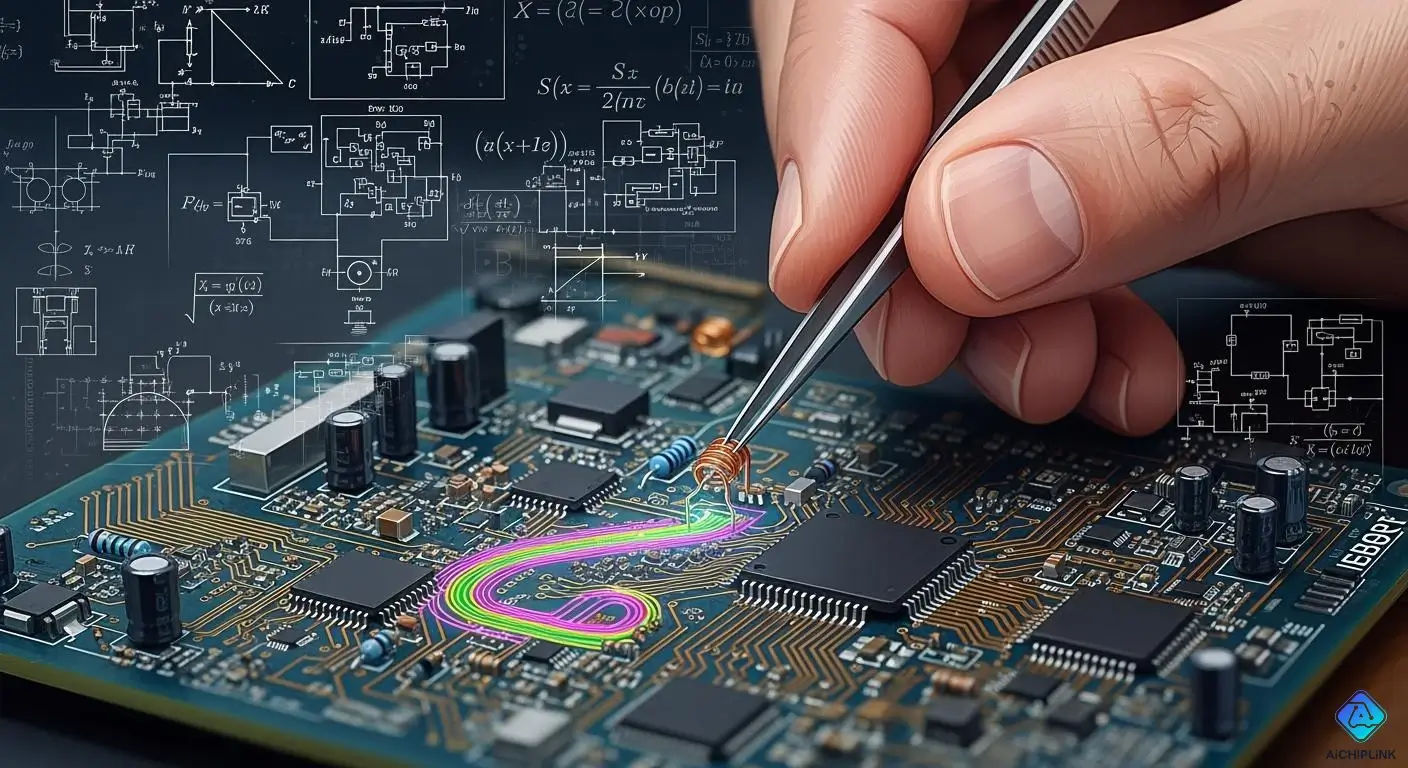
Imagine you have problems with signal loss or unstable signals in your RF project. You must pick the right inductor for critical RF circuit applications. The inductor you choose significantly impacts how well your circuit performs. New studies show that materials like ferrite and thin-film help maintain steady inductance. They also reduce unwanted effects at high frequencies. You should select inductors that operate effectively when hot and keep their values consistent. Small changes in their manufacturing can alter how inductors function. Therefore, testing with real data is crucial.
-
Ferrite and thin-film materials help circuits stay steady.
-
Steady inductance and low extra effects enhance performance in critical RF circuit applications.
-
Testing carefully helps you prevent problems before they arise.
Key Takeaways
-
Pick inductors with ferrite or thin-film materials for steady work in RF circuits.
-
Always look at the Q factor and tolerance of inductors to get less loss and better signal.
-
Try inductors in real circuits to make sure they work well and to stop problems.
-
Think about the self-resonant frequency of inductors to keep the signal strong at high frequencies.
-
Use simulation tools to help pick and design inductors before you build your RF circuit.
Inductor Choice in Critical RF Circuit Applications
Role of RF Inductors in High-Frequency Circuits
It is important to know how rf inductors work. They help keep signals strong and clear. Using rf inductors means less resistive loss. This keeps signals clean at high frequencies. RF inductors also improve self-resonant frequency. Your rf circuit works better and more efficiently. Regular inductors can have more losses and extra effects. RF inductors fix these problems more easily. You need them for wireless, IoT, and radar systems. High-Q ceramic inductors work best. They make circuits stable and reliable.
Tip: Always look at the Q value and loss rating before you pick an inductor for high-frequency circuits.
Application Areas: Impedance Matching, Filtering, Tuning
RF inductors are used in many ways. One main use is impedance matching networks. These networks connect different parts of your rf circuit. The right inductor helps match impedance and keeps power moving. Filtering is another important job. RF inductors block bad signals and let good ones through. You see filtering in wireless, IoT, 5G/6G, GPS, and radar systems. Tuning is also needed. Inductors help set the frequency in high-frequency circuits. This lets you get the signal you want.
Here is a table that lists common types of inductors for critical rf circuit applications:
| Type | Characteristics | Applications |
|---|---|---|
| Wire Wound | High Q, low DC resistance, large currents, high inductance | Peripheral antenna circuits |
| Multilayer | Compact, high performance, high reliability | General rf circuits |
| Film | Compact, high performance, low profile, tight tolerances | Impedance matching in high-frequency circuits |
You need to pick the right inductor for matching, filtering, and tuning. This choice changes how well your rf circuit works. High-Q ceramic inductors give better efficiency in rf and microwave uses. Your circuits will have less noise and better sensitivity.
Key RF Inductor Parameters
Inductance Value and Tolerance
You must look at the inductance value and tolerance when picking rf inductors for high-frequency circuits. Tolerance shows how much the real value can change from what is printed. For example, a 10 μH inductor with ±10% tolerance can be between 9 μH and 11 μH. Even small changes can affect how your rf circuit works. High-performance rf circuits, like filtering and matching, need tighter tolerances. Engineers like tighter tolerances, even if they cost more.
-
Tolerance, like ±10% or ±20%, can make the actual inductance change a lot.
-
Keeping tight tolerances is very important in rf design.
-
This matters most for filtering, matching, and oscillator circuits.
Quality Factor (Q) and Losses
The quality factor (Q) tells how well rf inductors work in high-frequency circuits. A high Q inductor has low resistance and loses less energy. This means you get better signals and less noise.
-
High Q gives a narrow bandwidth, which helps focus on certain frequencies in rf design.
-
Narrow bandwidth helps filters and amplifiers control frequencies well.
-
Low Q gives a wider bandwidth, which is good for things like Wi-Fi that use many frequencies. The Q factor also shows how close an inductor is to being perfect. You want a high Q inductor for strong signals and low losses.
Tip: High Q inductors help lower noise and make signals better in advanced rf circuits.
Self-Resonant Frequency (SRF)
You should check the self-resonant frequency when picking rf inductors for high-frequency circuits. SRF is the point where the inductor’s own capacitance and inductance start to work together. After this point, the inductor stops working right and can act like a capacitor. This can hurt your signal and cause problems in your rf circuit. Always pick inductors with SRF much higher than your working frequency. This keeps your circuits working well and protects your signals.
Parasitic Effects in RF Circuits
High-frequency circuits can have problems from parasitic inductance and capacitance. These unwanted effects can cause resonances, impedance mismatches, and signal distortion. You might see less bandwidth and weaker signals. Inductor losses can also add noise to power supply lines, especially from DC/DC converters. This noise can cause extra signals and lower signal quality. Things like temperature and humidity can change how inductors work. High temperatures can damage materials and cause early failure. Humidity can cause rust and electrical leaks, which hurt signals.
Note: Always think about parasitic effects and the environment when picking rf inductors for high-frequency circuits.
RF Inductor Technologies Compared
Wire-Wound vs. Multilayer
Wire-wound and multilayer inductors are used in rf circuits. Wire-wound inductors have a high Q factor. They use thick wire, so DC resistance is low. These inductors can handle bigger currents. You can use them for tough rf jobs. Multilayer inductors work well in small designs. They are reliable and fit in tight spaces. Pick wire-wound inductors for strong performance and less loss.
-
Wire-wound inductors have high Q.
-
They have lower DC resistance.
-
Wire-wound types handle bigger currents in rf circuits.
Thin-Film and Ceramic Inductors
Thin-film and ceramic inductors help make advanced rf circuits. Thin-film inductors are efficient and steady. They fit in small places and work at many frequencies. Ceramic inductors are reliable and lose less energy. Use these in rf circuits where space and stability are important. The table below shows thin-film inductor pros and cons.
| Type | Advantages | Disadvantages |
|---|---|---|
| Thin-film Inductors | High efficiency, small size, steady performance | Handles less current, costs more |
| Saves space and is reliable | Small inductance range, sensitive to heat and cold | |
| Works well at many frequencies | ||
| Surface mount for easy use |
Choosing for Critical RF Applications
Pick the right inductor for your rf circuit needs. For important rf jobs like 5G, 6G, GPS, and radar, focus on performance and reliability. Inductors for impedance matching make signals stronger by 15% in satellites. RF oscillators use steady inductors for better accuracy and energy use. Satellite and radar circuits need inductors to tune antennas and filters. This can make radar clearer by 25%. Power circuits use inductors that handle high currents and frequencies. This lowers power use by 10-15% in 5G systems.
| Application Area | Importance | Impact on Performance |
|---|---|---|
| Impedance Matching | Moves power between circuit parts. | Makes signals 15% stronger in satellites. |
| RF Oscillators | Makes steady signals for radar and communication. | Improves accuracy and saves energy for 6G. |
| Satellite and Radar | Tunes antennas and filters for better signals. | Makes radar clearer by up to 25%. |
| Power Management | Handles big currents and high frequencies with little loss. | Lowers power use by 10-15% in 5G. |
Think about reliability too. Some rf inductors, like ER5025S, meet strict rules for reliable circuits. ER10M and ER17S Series RF Inductors reach Level R. This means they are 10 times more reliable than Level P. These ratings help you build rf circuits that last longer and work better.
Matching Inductors to RF Circuit Needs
Defining Application Requirements
You need a plan before picking inductors for your rf circuit. Start by knowing what your circuit needs. Here are some steps to help you:
-
Operating Frequency Range: Find out what frequency your rf circuit uses. This helps you pick inductors that work well and do not lose signal.
-
Application Type: Decide what the inductor will do in your rf circuit. Some are better for filtering, others for tuning or matching impedance.
-
Physical Size and Form Factor: Check how much space is on your board. The inductor must fit and still work well.
-
Material and Construction: Look at the core material and how it is made. Some materials work better at high-frequency and last longer.
-
Parasitic Effects: Pick inductors with low unwanted capacitance and resistance. This keeps your rf circuit strong and steady.
Think about the temperature your circuit will face. High heat can change how inductors work. If your board is crowded, use magnetic shielding to protect other parts. Always match the output impedance of one part to the input impedance of the next. This helps your rf circuit send power without losing signal.
Simulation and Testing Methods
Simulation tools help you see how inductors will work before building your rf circuit. You can use these tools to check if your inductor choice is good. Here is how you use simulation and testing:
-
Enter the inductance value and frequency you want.
-
Add any size or shape limits for your board.
-
The tool will make and test the best layout for you.
-
You get a clean layout, good simulation results, a circuit model, and a netlist file for more tests.
Simulation lets you:
-
Model different shapes and layouts.
-
Make your rf circuit work better.
-
Find and fix parasitic effects early.
-
Check your ideas before building.
-
Save time and money.
-
Test for heat and stress.
-
Use other design tools.
After simulation, test your inductors in real circuits. Use these tests:
-
Inductance Test: Measure how well the inductor stores energy. This is important for rf circuit performance.
-
Q Factor Test: Check the quality of the inductor. High Q means less energy loss.
-
Resistance Test: Measure the resistance. Low resistance helps your circuit work better.
Testing and simulation together help you pick the best inductor for your rf circuit.
Practical Tips for Optimal Performance
You can follow easy tips to get the best from your rf inductors. These tips help you avoid mistakes and make your circuit more reliable:
-
Always use simulation to check for voltage spikes, current surges, and heat.
-
Pick inductors with low DC resistance and the best core material for your rf circuit.
-
Make sure the saturation current is higher than the highest current your circuit will use.
-
Choose inductors with a self-resonant frequency much higher than your circuit’s frequency.
-
Control heat by picking the right size inductor and putting it in a good spot.
You should also:
-
Use core materials like iron-alloy for better results at high-frequency.
-
Pick shielded inductors to stop electromagnetic interference.
-
Make sure the Q factor is right for steady operation.
-
Focus on reliability by choosing inductors that meet strict standards.
Conical inductors work well for broadband and noise-blocking jobs. They give high impedance over many frequencies. This helps block unwanted noise in rf circuits. You can use conical inductors as rf chokes to block high-frequency noise or as bias chokes in amplifiers. Their shape lowers stray capacitance, so they work well across a wide bandwidth.
Here is a table of common mistakes in inductor selection for advanced rf circuits:
| Parameter | Description |
|---|---|
| Inductance value | Affects performance; depends on turns, coil area, and core material. |
| Current ratings | Includes rated and saturation current; must match your circuit’s needs. |
| Q factor | Shows quality; important for low losses in high-speed designs. |
| Tolerance value | Difference between real and datasheet value; usually 5%, 10%, or 20%. |
Tip: Careful matching and testing help you avoid these mistakes and make your rf circuits more reliable.
You can get the best rf inductor performance by following these steps. Good parts, careful matching, and strong testing make your rf circuits work better and last longer.
You can make your rf circuit better by picking high-Q, low-loss inductors. These parts help your signals stay clear and make your circuit work well for a long time. Look at the table to see the main benefits:
| Feature | Benefit |
|---|---|
| High Q Factor | Less signal loss means your rf signals are clearer. |
| High SRF | High SRF helps your circuit lose less energy, even at very high frequencies. |
| High Reliability | These parts work well in tough places, so they are good for important jobs. |
Here are steps to help you pick inductors:
-
Make sure the part fits what your circuit needs.
-
Check the current rating if your circuit uses a lot of power.
-
Look at the Q factor and SRF for rf circuits.
-
Choose the right size and see if it needs shielding.
-
Match the tolerance to what the datasheet says.
Before you finish your design, use this checklist:
-
Mounting type
-
Inductance value
-
Current rating
-
DC resistance
-
Self-resonant frequency
-
Q factor
-
Temperature rating

Written by Jack Elliott from AIChipLink.
AIChipLink, one of the fastest-growing global independent electronic components distributors in the world, offers millions of products from thousands of manufacturers, and many of our in-stock parts is available to ship same day.
We mainly source and distribute integrated circuit (IC) products of brands such as Broadcom, Microchip, Texas Instruments, Infineon, NXP, Analog Devices, Qualcomm, Intel, etc., which are widely used in communication & network, telecom, industrial control, new energy and automotive electronics.
Empowered by AI, Linked to the Future. Get started on AIChipLink.com and submit your RFQ online today!
Frequently Asked Questions
What makes an inductor suitable for rf circuits?
You need an inductor with high Q, low losses, and a high self-resonant frequency. These features help your rf circuit keep signals strong and clear.
How do you choose the right size inductor for rf applications?
Check your rf circuit’s frequency and current needs. Pick an inductor that fits your board and meets your performance goals. Always check the datasheet for size and ratings.
Why does Q factor matter in rf design?
A high Q factor means your inductor loses less energy. This helps your rf circuit send cleaner signals and improves overall performance.
Can you use the same inductor for all rf applications?
No. Each rf application needs a specific inductor type. You must match the inductor’s value, Q factor, and size to your rf circuit’s needs.
How do you test inductors in rf circuits?
You can use simulation tools and real measurements. Test for inductance, Q factor, and resistance. This helps you make sure your rf circuit works as planned.

