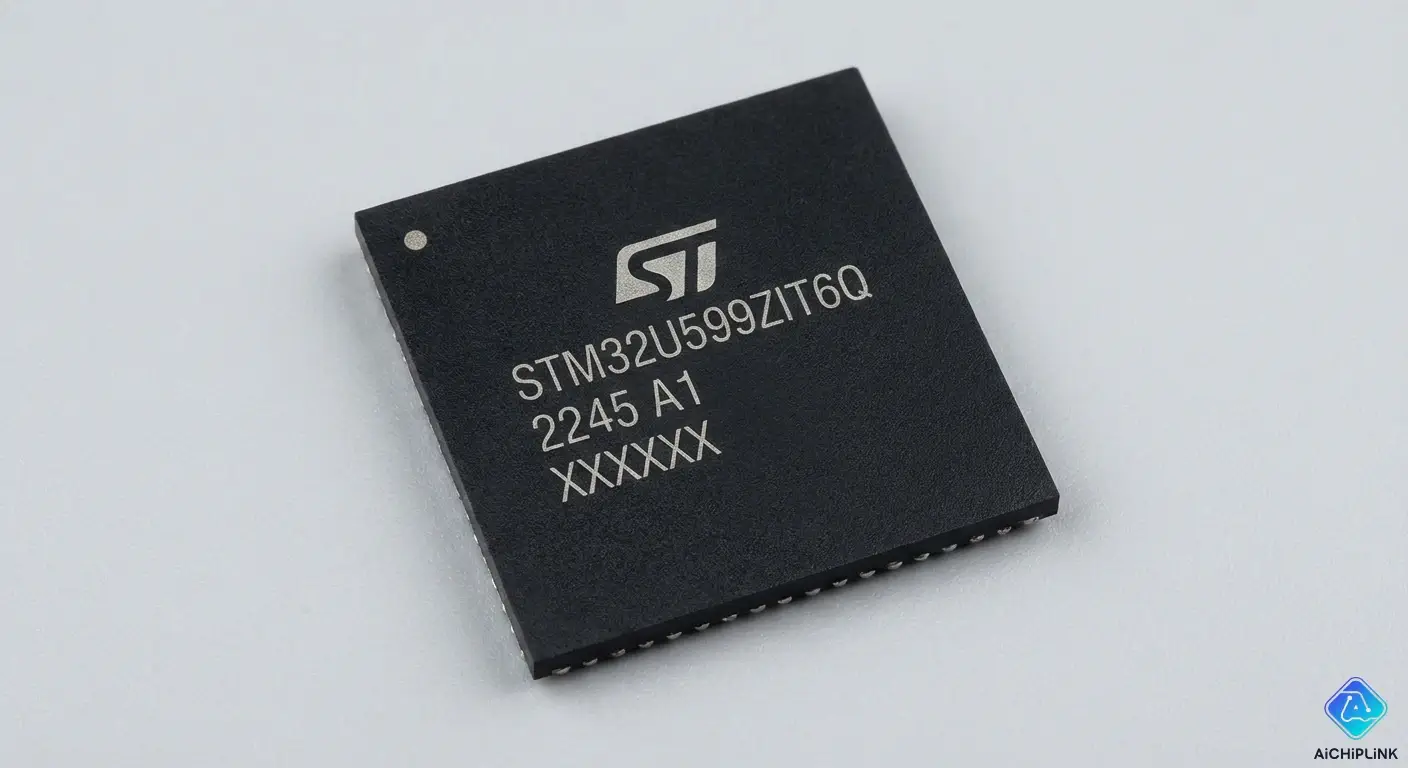
In the race to build smartwatches, smart home thermostats, and medical devices that look like smartphones but last for weeks on a battery, the STM32U599ZIT6Q is a game-changer.
Traditionally, developers had to choose between a high-performance MPU (which drains battery) for rich graphics, or a low-power MCU (which struggles with basic UI). The STM32U599 breaks this mold.
It combines the extreme energy efficiency of the Arm® Cortex®-M33 core (built on 40nm technology) with a dedicated NeoChrom GPU. This architecture allows developers to create smartphone-like user interfaces—complete with rotation, scaling, and alpha blending—without sacrificing battery life.
This guide explores the datasheet, the graphics capabilities, and the unique architecture of the STM32U599ZIT6Q.
Table of Contents
- 1. Decoding the Silicon: STM32U599ZIT6Q Specs
- 2. Graphics Revolution: The NeoChrom GPU
- 3. Ultra-Low Power Architecture (LPBAM)
- 4. Security & Hardware Design
- 5. Conclusion
1. Decoding the Silicon: STM32U599ZIT6Q Specs
The STM32U599ZIT6Q is the flagship of the U5 High-Performance series from STMicroelectronics. To understand its capabilities, we must first decode its name.
Part Number Breakdown
- STM32U5: Ultra-low-power series (40nm process), Cortex-M33 core.
- 99: High-end line featuring the NeoChrom GPU and MIPI DSI / JPEG codec.
- Z: 144 Pins (High I/O count).
- I: 2 Mbytes Flash Memory (Dual Bank).
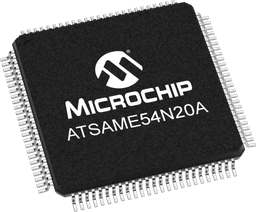
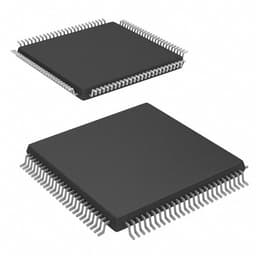
- T: LQFP Package (Low-profile Quad Flat Pack).
- 6: Industrial Temperature range (-40°C to +85°C).
- Q: SMPS (Switched Mode Power Supply). This suffix is crucial as it indicates the highest power efficiency tier.
Key Specifications Matrix
| Feature | Specification | Impact |
|---|---|---|
| Core | Arm® Cortex®-M33 | Running at 160 MHz with TrustZone, FPU, and DSP. |
| Flash Memory | 2 Mbytes | Dual bank architecture supports Read-While-Write (RWW) for OTA updates. |
| SRAM | 2.5 Mbytes | Massive internal RAM eliminates the need for external PSRAM for many graphical frame buffers. |
| Graphics | NeoChrom GPU | 2.5D Hardware Acceleration (Rotation, Scaling, Texture Mapping). |
| Display | MIPI DSI + RGB | Supports round displays and high-resolution screens. |
| Power Supply | 1.71 V to 3.6 V | Integrated SMPS for dynamic voltage scaling. |
| Package | LQFP144 | 20x20 mm footprint, hand-solderable for prototyping. |
Price Analysis & Stock Availability
The U599 is positioned as a premium MCU designed for graphical applications, often replacing lower-end MPUs.
Procurement Tip: Availability for high-end STM32s can fluctuate. [Check Stock for STM32U599ZIT6Q at Aichiplink] to view inventory from authorized distributors.
2. Graphics Revolution: The NeoChrom GPU
The defining feature of the STM32U599 is the NeoChrom GPU (also known as GPU2D).
NeoChrom vs. Chrom-ART
Previous generations of STM32 (like the F4 or F7) used the Chrom-ART Accelerator (DMA2D). While Chrom-ART was excellent for simple pixel copying and alpha blending, it couldn't handle complex transformations.
NeoChrom takes graphical performance to the next level by adding hardware support for:
- Rotation & Scaling: It can rotate images and zoom in/out in hardware.
- Texture Mapping: Mapping 2D textures onto shapes (essential for 3D-like effects such as "Cover Flow" or spinning dials).
- Vector Graphics: Improved handling of complex shapes.
Accelerating TouchGFX Interfaces
When using TouchGFX (ST's advanced GUI development tool), the NeoChrom GPU offloads almost all rendering tasks from the main Cortex-M33 CPU.
- The Result: You can run complex, fluid animations at 60 FPS while the CPU load stays near 5-10%. This leaves the CPU free to handle critical tasks like Wi-Fi stacks, Bluetooth communication, or sensor fusion algorithms.
3. Ultra-Low Power Architecture (LPBAM)
The "U" stands for Ultra-low power, and the U599 achieves this through LPBAM (Low Power Background Autonomous Mode).
Autonomous Peripherals
In Stop Mode (where the CPU is powered down), the STM32U599 is not "dead." Its smart peripherals (I2C, SPI, ADC, UART) can continue to operate using LPDMA (Low Power DMA).
- Example: The MCU can stay asleep while the I2C peripheral collects data from a temperature sensor. The CPU only wakes up if the temperature crosses a specific threshold. This significantly extends battery life.
SMPS: The "Q" Factor
The "Q" at the end of STM32U599ZIT6Q is vital. It signifies the presence of an internal SMPS (Step-Down Converter).
- Efficiency: Unlike a standard LDO (Linear Regulator) which burns excess voltage as heat, the SMPS efficiently converts the battery voltage (e.g., 3.3V) down to the core voltage (1.1V). This can reduce dynamic power consumption by up to 40% compared to LDO-only modes.
4. Security & Hardware Design
TrustZone & SRAM Layout
The Cortex-M33 core introduces Arm TrustZone® technology to the microcontroller world.
- Isolation: It provides hardware-enforced isolation between the "Secure World" (Keys, Crypto, Bootloader) and the "Non-Secure World" (Application, GUI, Radio Stack).
- Memory Protection: The massive 2.5MB SRAM is fragmented into blocks that can be individually assigned to Secure or Non-Secure zones, ensuring that a bug in your GUI code cannot compromise your encryption keys.
Connectivity Interfaces
With the LQFP144 package, developers get access to a rich set of I/Os:
- 2x Octo-SPI: For connecting external high-speed NOR Flash or PSRAM. This is crucial if your graphical assets exceed the internal flash size.
- USB Type-C / Power Delivery: Native controller support for modern charging.
- Camera Interface: 8-14 bit camera interface for video input or QR code scanning.
5. Conclusion
The STM32U599ZIT6Q bridges the gap between traditional MCUs and power-hungry application processors. By offering NeoChrom 2.5D graphics within an ultra-low-power envelope, it is the perfect choice for next-generation wearables, smart home control panels, and secure portable medical devices.
Sourcing High-Performance MCUs Ensure your project has the silicon it needs. Visit Aichiplink.com to search for STM32U599ZIT6Q, development kits, and compatible displays.

Written by Jack Elliott from AIChipLink.
AIChipLink, one of the fastest-growing global independent electronic components distributors in the world, offers millions of products from thousands of manufacturers, and many of our in-stock parts is available to ship same day.
We mainly source and distribute integrated circuit (IC) products of brands such as Broadcom, Microchip, Texas Instruments, Infineon, NXP, Analog Devices, Qualcomm, Intel, etc., which are widely used in communication & network, telecom, industrial control, new energy and automotive electronics.
Empowered by AI, Linked to the Future. Get started on AIChipLink.com and submit your RFQ online today!
Frequently Asked Questions
Can the STM32U599 drive a 454x454 smartwatch display?
**Yes.** With 2.5MB of internal SRAM, it can hold a full frame buffer for a 454x454 display (16-bit color) internally. This eliminates the need for external RAM, saving PCB space, BOM cost, and power.
What is the difference between STM32U599 and STM32U585?
The main difference is **graphics performance**. * **STM32U599**: Includes the **NeoChrom GPU** (2.5D accelerator) and typically MIPI DSI support. * **STM32U585**: Includes the simpler **Chrom-ART Accelerator** and usually lacks the advanced NeoChrom features. Choose the U599 for high-end graphical UIs.
Does TouchGFX support the NeoChrom GPU?
Yes. The TouchGFX Generator in **STM32CubeMX** allows you to enable NeoChrom GPU hardware acceleration with a single checkbox. The code generator automatically optimizes the rendering pipeline to use the GPU.
Is the LQFP144 package difficult to solder?
It is manageable for prototyping. While the 0.5mm pitch requires a steady hand and flux for manual soldering, it is significantly easier to work with than the BGA (Ball Grid Array) variants found on other high-density chips.
Does it support OTA (Over-The-Air) updates?
Yes. The 2MB Flash is configured as **Dual Bank**. This allows the device to download a new firmware image to Bank 2 while the application continues running from Bank 1 (Read-While-Write). The update is applied seamlessly upon the next reboot.