You walk over to your thermostat, turn the temperature down, and hear a "click." You wait for the rush of cold air, but... silence. The air handler is humming, but the fan isn't blowing.
The culprit? It is very likely a small, inexpensive black box called a Motor Relay.
But what exactly does a motor relay do in an HVAC system? In short, it is the heavy-lifter of your electrical system. It allows your delicate, low-voltage thermostat to control the powerful, high-voltage motors that actually move the air.
Here is a breakdown of how it works, the different types, and how to tell if yours has failed.
Table of Contents
- The Core Function: Bridging Low and High Voltage
- How a Motor Relay Works (The Magnet Principle)
- Relay vs. Contactor: What is the Difference?
- 3 Common Symptoms of a Bad Relay
- Troubleshooting Guide: How to Test It
1. The Core Function: Bridging Low and High Voltage
To understand relays, you first need to understand the two different "worlds" of electricity inside your AC unit:
- The Brain (Low Voltage): Your thermostat and control board usually run on 24 Volts. This is safe to touch and uses thin wires, but it doesn't have enough power to run a motor.
- The Muscle (High Voltage): Your blower motor and compressor run on 120 Volts or 240 Volts. This requires thick wires and dangerous amounts of electricity.
The Relay acts as the bridge. It is an electrical switch that allows the "Brain" to turn on the "Muscle" without the two electrical currents ever touching each other.
Without a relay, if you tried to wire a blower motor directly to a thermostat, the high voltage would instantly melt the thermostat and potentially cause a fire.
2. How a Motor Relay Works (The Magnet Principle)
Inside that small plastic box, there is a simple but ingenious mechanism. It consists of two main parts:
- The Coil (Control Circuit): This is connected to your thermostat.
- The Contacts (Power Circuit): This is a switch connected to the motor.
The Sequence of Operation:
- Signal: Your thermostat sends a 24V signal to the relay's Coil.
- Magnetism: The electricity flows through the coil, creating a magnetic field (it becomes an electromagnet).
- Action: This magnetic force physically pulls the metal Contacts closed (Snap!).
- Power: High-voltage electricity flows across the closed contacts and powers the Motor.
- Stop: When the thermostat satisfies the temperature, it cuts the 24V signal. The magnet turns off, a spring pulls the contacts open, and the motor stops.
3. Relay vs. Contactor: What is the Difference?
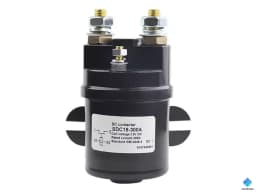
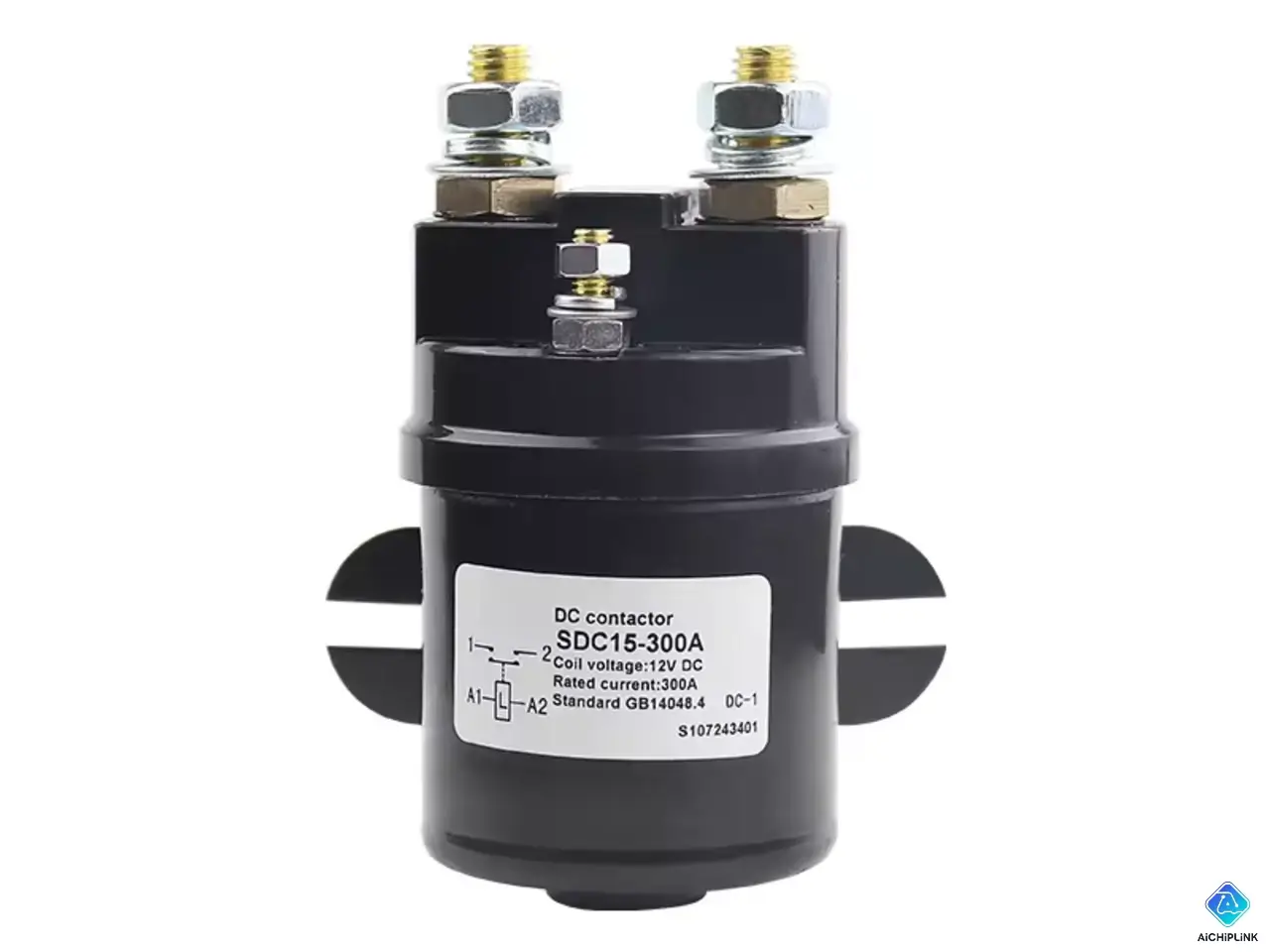
If you open your outdoor AC unit, you will see a large switch called a Contactor. If you open your indoor furnace, you will see a smaller switch called a Relay.
They do exactly the same thing, but with one key difference: Size and Strength.
| Feature | Relay | Contactor |
|---|---|---|
| Amperage Handling | Low (< 20 Amps) | High (> 20 Amps) |
| Physical Size | Small, often enclosed in a black box | Large, often open/visible mechanism |
| Typical Use | Indoor Blower Fans, Control Boards | Outdoor Compressors, Condenser Fans |
| Cost | Cheap ($10 - $20) | Moderate ($20 - $50) |
4. 3 Common Symptoms of a Bad Relay
Relays are mechanical devices with moving parts. Over time, they wear out. Here is how to tell if yours is failing:
1. The Fan Won't Start
You hear the AC compressor outside running, but no air is coming out of the vents.
- Cause: The relay coil has burnt out (open loop), or the contacts are so coated in carbon (pitting) that electricity cannot pass through them.
2. The Fan Won't Stop (Stuck Closed)
The blower fan keeps running continuously, even when you turn the thermostat to "OFF" or remove the thermostat from the wall.
- Cause: The relay contacts have welded together. The high heat of the electrical arc has melted the metal switch into a permanently "ON" position. This is a fire hazard.
3. Buzzing or Clicking (Chirping)
You hear a rapid clicking or buzzing sound coming from your furnace or air handler.
- Cause: The magnet is trying to pull the switch closed, but the coil is weak, or the mechanical arm is physically stuck/jammed.
5. Troubleshooting Guide: How to Test It
⚠️ Warning: HVAC systems contain dangerous voltages. Turn off the breaker before opening any panels.
You can test a relay with a simple Multimeter.
- Visual Inspection: Look for melted plastic or brown burn marks on the relay casing or the circuit board. If it looks burnt, replace it immediately.
- Test the Coil (Resistance):
- Set your meter to Ohms ($\Omega$).
- Touch the probes to the low-voltage coil terminals (usually labeled with smaller wires).
- Good: You should see a resistance value (usually 10-200 Ohms).
- Bad: If it reads "OL" (Open Line), the coil is broken internally.
- Test the Contacts (Continuity):
- Remove the relay wires (label them first!).
- Set meter to Continuity.
- Touch the high-voltage terminals. They should be "Open" (No beep) when not powered.
- Note: If you get a beep when the relay is unplugged, the contacts are welded shut.
Conclusion
The motor relay is the unsung hero of your HVAC system. It takes the gentle command from your thermostat and unleashes the power needed to cool your home. While they are simple components, their failure can bring your entire system to a halt.
Sourcing HVAC Electrical Parts Need a replacement Fan Relay, Contactor, or Capacitor? Visit Aichiplink.com to search for high-quality HVAC components to keep your system running cool.

Written by Jack Elliott from AIChipLink.
AIChipLink, one of the fastest-growing global independent electronic components distributors in the world, offers millions of products from thousands of manufacturers, and many of our in-stock parts is available to ship same day.
We mainly source and distribute integrated circuit (IC) products of brands such as Broadcom, Microchip, Texas Instruments, Infineon, NXP, Analog Devices, Qualcomm, Intel, etc., which are widely used in communication & network, telecom, industrial control, new energy and automotive electronics.
Empowered by AI, Linked to the Future. Get started on AIChipLink.com and submit your RFQ online today!
Frequently Asked Questions
What does a motor relay do in an HVAC system?
A motor relay allows a low-voltage signal from the thermostat (usually 24V) to safely switch high-voltage power (120V or 240V) to HVAC components like blower motors or fan motors. It acts as an electrical bridge between control circuits and power circuits.
Where is the motor relay located in an HVAC unit?
Motor relays are typically located on the control board inside the furnace or air handler, near the blower motor wiring. In some systems, the relay may be a separate plug-in or screw-mounted component rather than integrated into the main board.
What happens when an HVAC motor relay goes bad?
A failed motor relay can cause the blower fan to not start, run continuously, or make buzzing/clicking noises. In some cases, welded contacts can create a safety risk by keeping the motor energized even when the system is turned off.
Is a bad motor relay dangerous?
Yes, it can be. If relay contacts weld closed, the motor may run nonstop, leading to overheating, increased fire risk, or premature motor failure. This is why a faulty relay should be replaced as soon as symptoms appear.
Can I replace an HVAC motor relay myself?
Basic relay replacement is possible for experienced DIYers, but it requires turning off power at the breaker, proper wiring identification, and using an exact replacement relay with the same coil voltage and contact rating. If unsure, a licensed HVAC technician is recommended.